
In the whirlwind of the Premier League’s 2025-26 season, few moments have captured the imagination of football fans like the astonishing 4-4 draw between Manchester United and Bournemouth at Old Trafford. Central to this drama was none other than Bruno Fernandes, whose leadership, skill, and emotional intensity encapsulated the rollercoaster of a match where the Red Devils narrowly escaped an improbable comeback. This game not only tested the resilience of Manchester United but also cast a spotlight on Fernandes’s pivotal role both on and off the field, highlighting his unyielding spirit in a season fraught with challenges.
The match served as a vivid reminder of football’s beauty and brutality—high-octane, unpredictable, and emotionally charged. For Fernandes, the encounter was more than just a clash for points; it was a testament to his leadership qualities and footballing heart that continue to define his tenure at Old Trafford. What unfolded was a night that cemented Fernandes’s reputation as Manchester United’s emotional nucleus, showcasing his capacity for both sublime goal-scoring and fiery frustration.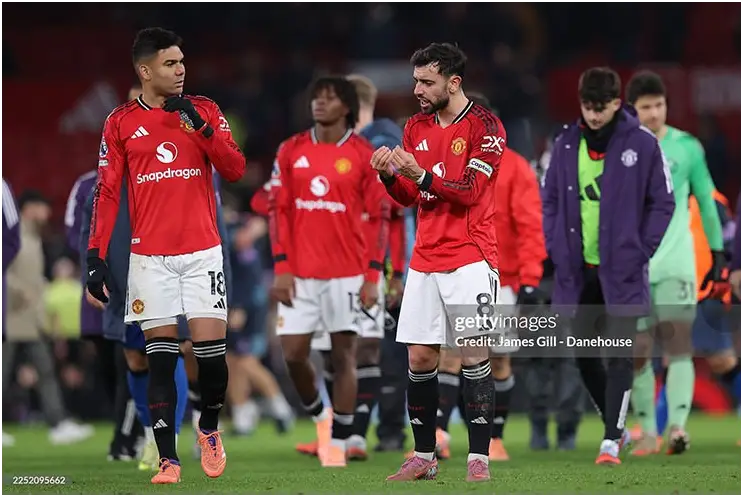
Introduction to the Match and Key Moments
Overview of the Historic 4-4 Encounter at Old Trafford
The atmosphere at Old Trafford was electric from the outset, setting the stage for what would become one of the most electrifying matches in recent Premier League history. Manchester United opened the scoring early with a fine strike from Amad Diallo, igniting the home crowd with hopes of an emphatic victory. However, Bournemouth responded swiftly, leveling the score through Antoine Semenyo, and setters the tone for a match filled with relentless intensity. The game saw Manchester United take the lead thrice, only for Bournemouth to level each time, culminating in a dramatic 4-4 draw that kept fans on the edge of their seats until the final whistle.
The scoring sequence was a rollercoaster—highlighted by tactical shifts, individual brilliance, and moments of defensive chaos. Fernandes’s goal from a precise free-kick added to the spectacle, but it was the unpredictability and late drama that truly defined this encounter. Such a high-scoring, open game exemplified the unpredictable nature of Premier League football and reinforced the importance of mental resilience in top-tier competition.
Significance of the Match for Manchester United
For Manchester United, this match was more than just a point; it was a mirror reflecting the season’s ongoing struggles and strengths. The away loss or draw could have been demoralizing, but instead, it ignited a renewed sense of urgency and tenacity within the team. The draw kept Manchester United’s hopes alive in the top contenders’ chase, yet it also exposed the vulnerabilities—particularly in defense—that they needed to address to truly compete at the highest level.
From a psychological standpoint, the game underscored the importance of mental fortitude, especially when facing adversity late in matches. It was a stark reminder that consistency and resilience are essential ingredients for success, especially with sizeable fixtures looming, including the upcoming clash against a formidable Aston Villa side. For Fernandes, this match reinforced his role not just as a goal scorer but as the emotional leader of the team.
Role of Bruno Fernandes in the Match
Throughout the match, Bruno Fernandes demonstrated why he is considered Manchester United’s heartbeat. His goals, orchestrations, and relentless energy fueled the team’s attacks and kept the fans hopeful. Particularly striking was Fernandes’s goal from a well-executed free-kick, which temporarily put the Red Devils ahead and showcased his composure under pressure. However, his influence extended beyond scoring—Fernandes’s leadership was visible in his gestures, tactical awareness, and emotional reactions.
Despite his crucial contributions on the pitch, Fernandes’s post-match demeanor revealed a tumult of frustrations. His body language—clenching fists, vocal gestures, and vocal exchanges with teammates—highlighted the mounting pressure he felt to turn the season around. His outbursts and confrontations with teammates after the game underscored the emotional stakes for a captain who refuses to accept mediocrity, embodying the high standards he sets for himself and the squad.
Detailed Breakdown of the Match Events
Early Goals and Bournemouth’s Response
The match began with Manchester United asserting dominance early, led by Amad Diallo’s stunning opening goal dotted with finesse and creativity. It was a moment that electrified the home fans and signified the attacking intent of the Red Devils. Yet, Bournemouth’s resilience came to the fore as Antoine Semenyo swiftly responded, capitalizing on defensive lapses and evening out the score within minutes, demonstrating how fragile yet responsive the game was.
Bournemouth’s quick reply was a wake-up call for Manchester United, highlighting the importance of defensive organization. The visitors’ ability to swiftly counter-attack exposed defensive vulnerabilities, suggesting that despite the attacking prowess, the team was sometimes caught off-guard, with errors in positioning and decision-making opening doors for Bournemouth’s quick equalizers.
Turning Points and Tactical Shifts
The match saw several pivotal moments—Casemiro’s goal right before halftime, which briefly restored Manchester United’s lead, exemplified their capability to regain momentum. James Tavernier’s free-kick in the second half, which could have been better handled by the goalkeeper, was a critical turning point, allowing Bournemouth to ascend ahead once more. These moments illustrated the fine margins between control and chaos in such high-stakes encounters.
Fernandes’s contribution was crucial when he scored a meticulously placed free-kick, bringing the hosts level yet again, showcasing his ability to influence the game creatively. Matheus Cunha’s swift finish after Fernandes’s goal underscored the attacking threat that the team could unleash, but the match’s intensity meant tactical adjustments—switching formations and pressing strategies—became necessary. These shifts kept Bournemouth guessing and demonstrated the importance of tactical flexibility in churning out results.
The Final Minutes and Dramatic Equalizer
In the dying moments, Eli Junior Kroupi’s well-taken goal carved the final nail in the coffin, denying Manchester United a victory and leaving fans both ecstatic and frustrated. The late goal not only changed the result but also significantly impacted Fernandes’s emotional state, as he was seen venting his frustration, emotions bubbling over amid the chaos.
This equalizer highlighted the unforgiving nature of football where seconds can alter dreams. The team’s collective morale was visibly affected, with Fernandes’s body language revealing the toll of an unresolved game. Such moments underscored the necessity for mental resilience and composure, especially for a captain tasked with rallying his teammates in critical situations.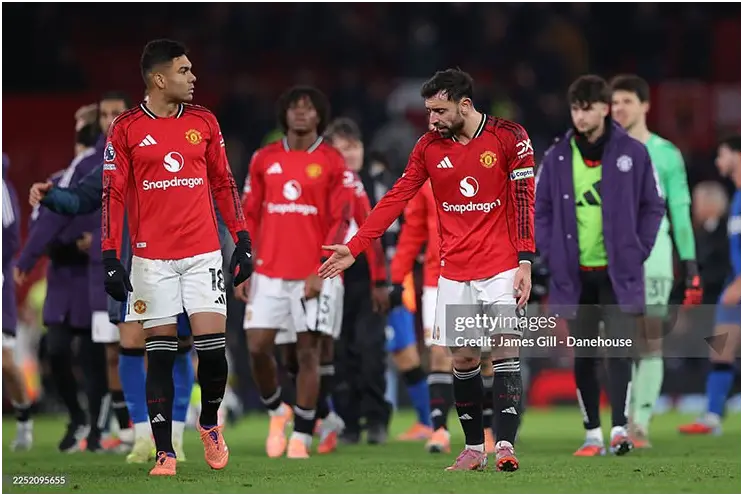
Bruno Fernandes’s Emotional and Leadership Traits
Post-Match Reactions and Body Language
After the final whistle, Fernandes’s raw emotions burst forth, with intense gestures and vocal outbursts that conveyed his disapproval of defensive lapses and the overall team effort. His gestures—clenching fists, pointing at teammates, and exchanging words—highlighted a captain’s fierce desire for perfection and victory. Such reactions, while sometimes viewed controversially, genuinely reflect Fernandes’s passion and leadership drive.
His body language spoke volumes: a man visibly distressed yet determined to rally his teammates. Fernandes’s emotional candor, whether through confrontations or motivational words, played a crucial role in maintaining the team’s fighting spirit, especially following such a dramatic result. It further cemented his reputation as a leader whose actions and words influence the team beyond mere tactical instructions.
Captaincy and Team Dynamics
As captain, Fernandes’s influence extends beyond goals and assists—he embodies Manchester United’s fighting spirit, rallying his teammates in moments of despair and frustration. His emotional reactions reveal a man deeply invested in every game and committed to pushing his team towards excellence, sometimes through visible anguish that underscores his competitiveness.
His role in team dynamics is multifaceted; Fernandes’s vocal leadership helps maintain cohesion, but his emotional intensity can also serve as a catalyst for self-reflection among teammates. Balancing his passion with strategic composure remains a key aspect of his captaincy, especially when navigating the turbulent waters of a challenging season.
Impact of Player Emotions on Team Performance
Player emotions have a profound effect on team cohesion; Fernandes’s visible frustration can either inspire or demoralize depending on how it’s channeled. His reactions serve as a mirror of the team’s morale, illustrating the importance of emotional regulation to maintain focus and unity. Effective leadership involves harnessing such passion to motivate rather than unsettle the squad.
Manchester United’s future success hinges on how well Fernandes and the team handle these emotional swings. A leader’s ability to stay composed under pressure can stabilize performances, fostering a culture of resilience needed to climb the league standings and compete at the highest level.
Defensive Weaknesses Exposed
Analysis of MU’s Defensive Lapses
The match laid bare Manchester United’s defensive fragility. Errors in positioning, miscommunication, and lapses in concentration resulted in Bournemouth’s early goal and subsequent scores. These defensive mishaps —whether poor marking on set-pieces or slow reactions to Bournemouth’s swift counterattacks— turned a promising game into a tense, unpredictable encounter.
Particularly, Bournemouth’s goal in the second half exploited gaps left by defensive unsteadiness, underscoring the need for tighter defensive organization. The vulnerable moments appeared to stem from a lack of discipline and focus, which could be attributed to systemic issues rather than isolated mistakes.
The Costly Mistakes and Systemic Issues
The recurring defensive errors suggested deeper problems within Manchester United’s structural setup. The defensive line often appeared disjointed, showing a lack of communication and coordination. This systemic weakness was further magnified by individual errors, indicating the need for tactical revisions and possibly personnel adjustments.
Addressing these vulnerabilities requires a comprehensive review of defensive training, communication protocols, and positional discipline. Without rectifying these issues, the team risks conceding more avoidable goals in future fixtures, jeopardizing their standings and confidence.
Lessons for Future Matches
To improve, Manchester United must emphasize defensive discipline and communication. Drills focusing on coordination and anticipation can reduce errors under pressure. Additionally, tactical flexibility—such as adjustments in defensive shape or pressing intensity—may bolster resilience. Learning from this match, the coaching staff should focus on building cohesion and confidence to avoid repeating costly mistakes.
Preparing for upcoming fixtures like the trip to Aston Villa involves not only tactical refinement but also mental fortitude. The players need to translate their attacking flair into a more organized defensive effort, ensuring that star performances are supported by solid backline discipline.
Tactical and Managerial Perspectives
Performance Under Ruben Amorim’s Management
Ruben Amorim’s tactical approach emphasizes attacking fluidity combined with high press, which has brought exciting football but also exposes defensive gaps. The recent match illustrated both the strengths and vulnerabilities of his system—creative attacking patterns and pressing intensity contrasted with occasional defensive lapses.
Under Amorim’s leadership, Manchester United has shown flashes of brilliance but needs to tighten defensive organization. The team’s ability to adapt tactically during matches remains crucial, especially against disciplined opponents like Bournemouth, who exploited the moments of vulnerability.
Analysis of Strategic Adjustments
Going forward, strategic refinements are essential. Incorporating deeper defensive lines or adjusting pressing triggers could provide more stability. Similarly, rotating personnel or tweaking formations might mitigate the systemic weaknesses exposed during matches. Enhanced focus on transition defense and marking set-pieces would also reduce conceding opportunities.
Tactical flexibility can help the team manage different game phases more effectively, turning potential vulnerabilities into advantages. Implementing disciplined routines and emphasizing positional awareness during training will be vital in elevating overall performance and reducing defensive errors.
Future Challenges and Opportunities
Looking ahead, the upcoming fixture against Aston Villa presents a significant challenge to test how well Manchester United can implement tactical and mental adjustments. This game offers an opportunity to refine defensive cohesion and demonstrate resilience, especially after such a high-scoring encounter. The coaching staff must prioritize stability and discipline for optimal results.
Beyond individual matches, the season’s broader challenges involve maintaining consistency amid injuries, suspensions, and mounting pressure in league and domestic cups. The club’s strategic focus on player development, tactical adaptability, and emotional intelligence will determine their capacity to climb higher in the standings.
The Broader Context: Premier League Standings and Aspirations
Current League Position and Competitors
Manchester United remains in the mix for Champions League qualification, but their journey is marked by a need for steadiness amid fierce competition. Teams like Arsenal, Liverpool, and Manchester City are snapping at their heels, emphasizing the importance of every point and clean performance.
The 4-4 draw, while dramatic, underscores the necessity for relentless consistency in both attack and defense. Positioning in the top five requires not only tactical prowess but also mental toughness—especially when facing formidable adversaries.
The Significance of Consistency
Without consistency, even the most talented teams falter in pursuit of long-term objectives. Manchester United must learn from this match, recognizing that high-scoring games are exhilarating but unsustainable without robust defensive foundations. Political, tactical, and mental stability are crucial to turning fleeting moments of brilliance into sustained success.
Such stability fosters confidence within the squad and reassures fans that the club’s ambitions are realistic. Developing resilience and focus will be vital in the demanding landscape of the Premier League, where every fixture counts.
Implications for Club Strategy
This match’s lessons may influence future transfer policies – perhaps emphasizing defenders or experienced leaders to shore up vulnerabilities. Training regimes could shift towards building mental resilience and tactical discipline. Leadership development, especially for young stars and existing captains like Fernandes, remains a priority.
The club’s strategic vision, aligned with nurturing player resilience and tactical versatility, aims to elevate Manchester United into a consistent title contender. The coach’s ability to adapt and instill a balanced approach will be critical in navigating this complex and competitive environment.
Conclusion
The exhilarating 4-4 draw against Bournemouth at Old Trafford, driven by the exceptional performance and emotional leadership of Bruno Fernandes, encapsulated the unpredictable heart of Premier League football. This match highlighted the team’s attacking prowess and defensive vulnerabilities, emphasizing the importance of mental resilience and tactical discipline in pursuit of higher goals. Fernandes’s role as captain—marked by passionate reactions, goal contributions, and unwavering leadership—underscored his crucial position within the squad’s ambitions. As Manchester United look ahead to challenging fixtures against top contenders, learning from this encounter and addressing systemic weaknesses will be vital. The season’s future success will depend on their ability to maintain consistency, develop strategic flexibility, and harness the unyielding spirit embodied by Fernandes and the entire team in their quest to reclaim their rightful place among England’s football giants.